Anatomy for Women
Pelvic Floor Anatomy for Women
Section titled “Pelvic Floor Anatomy for Women”The female pelvic floor is a complex network of muscles, ligaments, and tissues that support your pelvic organs and control important bodily functions.
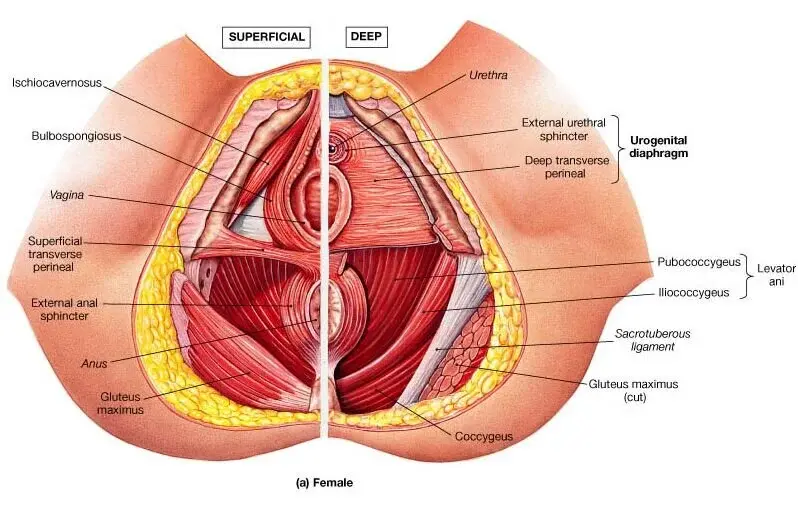
The Pelvic Floor Muscles
Section titled “The Pelvic Floor Muscles”Your pelvic floor consists of several layers of muscles:
Superficial Layer
Section titled “Superficial Layer”- Located closest to the skin
- Includes muscles around the vaginal and anal openings
- Involved in sexual function and some sphincter control
Deep Layer (Levator Ani)
Section titled “Deep Layer (Levator Ani)”- The main supportive “hammock” of muscles
- Includes three muscle groups:
- Puborectalis - wraps around the back passage
- Pubococcygeus - supports the bladder and vagina
- Iliococcygeus - provides broad support across the pelvis
The Organs Your Pelvic Floor Supports
Section titled “The Organs Your Pelvic Floor Supports”Bladder
Section titled “Bladder”- Stores and releases urine
- Sits at the front of your pelvis, behind the pubic bone
- Supported by the front part of your pelvic floor
Uterus
Section titled “Uterus”- Sits in the middle of your pelvis
- Held in position by ligaments and pelvic floor muscles
- The cervix (neck of the uterus) sits at the top of the vagina
Vagina
Section titled “Vagina”- The muscular tube leading from the outside to the cervix
- Surrounded by pelvic floor muscles
- Has three openings through the pelvic floor: urethra (front), vagina (middle), and anus (back)
Bowel (Rectum and Anal Canal)
Section titled “Bowel (Rectum and Anal Canal)”- The lower part of your intestine
- Sits at the back of your pelvis
- Controlled by pelvic floor muscles and anal sphincters
How Everything Works Together
Section titled “How Everything Works Together”Your pelvic floor muscles:
- Form a supportive base for your bladder, uterus, and bowel
- Control three openings: the urethra (for urine), vagina, and anus
- Respond to pressure changes when you cough, sneeze, or lift
- Coordinate with your other core muscles for spinal support
Changes Throughout Life
Section titled “Changes Throughout Life”Your pelvic floor can be affected by:
- Pregnancy - hormones soften tissues, baby’s weight increases pressure
- Childbirth - muscles and tissues stretch, sometimes tear or are cut
- Menopause - reduced estrogen affects tissue health
- Age - muscles may naturally weaken over time
- Surgery - operations can affect muscle and nerve function
Common Problems
Section titled “Common Problems”When the pelvic floor isn’t working optimally, you might experience:
- Stress incontinence - leaking urine with coughing, sneezing, or exercise
- Urgency - sudden, strong urges to use the toilet
- Prolapse - feeling of bulging or pressure in the vagina
- Pelvic pain - discomfort in the pelvis, lower back, or during intercourse
The Good News
Section titled “The Good News”Most pelvic floor problems can be improved with:
- Proper pelvic floor exercises
- Lifestyle modifications
- Professional help when needed
Understanding your anatomy is the first step toward maintaining good pelvic health throughout your life.
For visual guides and more detailed anatomy information, visit the Pelvic Floor Disorders Network anatomy section and explore NHS Northern Ireland’s women’s health resources.