Pelvic Organ Prolapse
Pelvic Organ Prolapse (POP)
Section titled “Pelvic Organ Prolapse (POP)”Pelvic organ prolapse occurs when one or more of the organs in your pelvis slip from their normal position and press against the walls of the vagina. While this sounds alarming, it’s actually very common and there are many effective treatment options.

What Is Prolapse?
Section titled “What Is Prolapse?”Think of your pelvic organs (bladder, uterus, bowel) as being held in place by a supportive “hammock” of muscles and tissues. When this support system weakens or is damaged, one or more organs can drop or “prolapse” into the vaginal space.
Types of Prolapse
Section titled “Types of Prolapse”Bladder Prolapse (Cystocele)
Section titled “Bladder Prolapse (Cystocele)”- The bladder drops into the front wall of the vagina
- Most common type of prolapse
- May affect bladder emptying
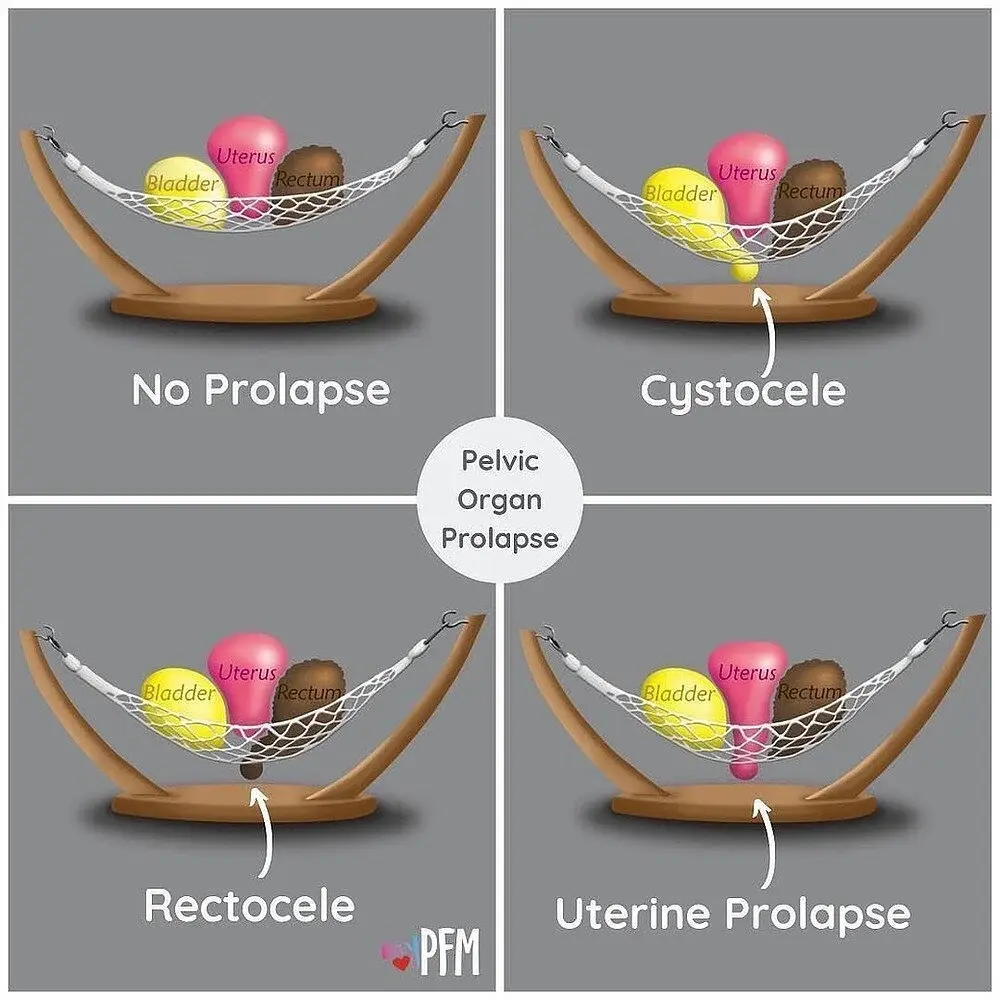
Bowel Prolapse (Rectocele)
Section titled “Bowel Prolapse (Rectocele)”- The rectum bulges into the back wall of the vagina
- May affect bowel emptying
- Can cause a feeling of incomplete evacuation
Uterine Prolapse
Section titled “Uterine Prolapse”- The uterus drops into the vaginal canal
- In severe cases, may protrude outside the vagina
- Can occur after hysterectomy (vault prolapse)
Small Bowel Prolapse (Enterocele)
Section titled “Small Bowel Prolapse (Enterocele)”- Part of the small intestine drops into the upper vagina
- Less common but can occur with other types
Symptoms
Section titled “Symptoms”Not everyone with prolapse has symptoms, but when present, they may include:
Physical Sensations:
Section titled “Physical Sensations:”- Feeling of bulging, fullness, or pressure in the vagina
- Something “falling out” or protruding from the vagina
- Backache or pelvic discomfort
- Heaviness in the pelvis, especially at the end of the day
Urinary Symptoms:
Section titled “Urinary Symptoms:”- Difficulty starting urination
- Feeling of incomplete bladder emptying
- Needing to lift the prolapse to empty your bladder
- Frequent urinary tract infections
Bowel Symptoms:
Section titled “Bowel Symptoms:”- Difficulty with bowel movements
- Feeling of incomplete emptying
- Needing to support the back wall of the vagina to have a bowel movement
- Constipation
Sexual Symptoms:
Section titled “Sexual Symptoms:”- Discomfort during intercourse
- Reduced sensation
- Difficulty with penetration
Grades of Prolapse
Section titled “Grades of Prolapse”Prolapse is graded from 0 to 4:
- Grade 0: No prolapse
- Grade 1: Mild - organs slightly dropped but still inside vagina
- Grade 2: Moderate - organs dropped to the vaginal opening
- Grade 3: Severe - organs protrude outside the vagina
- Grade 4: Complete - organs completely outside the vagina
What Causes Prolapse?
Section titled “What Causes Prolapse?”Primary Causes:
Section titled “Primary Causes:”- Childbirth - especially vaginal delivery of large babies, prolonged labor, or instrumental delivery
- Age - tissues naturally weaken over time
- Menopause - reduced estrogen significantly affects tissue strength and elasticity
- Estrogen decline leads to decreased collagen production
- Weakening of connective tissues that support pelvic organs
- Loss of tissue elasticity and strength
- Risk increases substantially in the years following menopause
Contributing Factors:
Section titled “Contributing Factors:”- Chronic constipation and straining
- Chronic cough
- Heavy lifting
- Being overweight
- Previous pelvic surgery
- Family history
- Connective tissue disorders
How Common Is It?
Section titled “How Common Is It?”- Up to 50% of women who have had children have some degree of prolapse
- Many women have mild prolapse without symptoms
- About 12% of women will have surgery for prolapse during their lifetime
- Risk increases with age, especially after menopause
Impact on Quality of Life
Section titled “Impact on Quality of Life”Prolapse can affect:
- Physical comfort and mobility
- Confidence in social situations
- Exercise and physical activity
- Intimate relationships
- Work and daily activities
- Mental wellbeing and self-image
When to Seek Help
Section titled “When to Seek Help”See your healthcare provider if you experience:
- Any bulging or pressure in your vagina
- Difficulty with bladder or bowel emptying
- Discomfort during daily activities
- Concerns about changes in your body
- Impact on your quality of life
Treatment Options
Section titled “Treatment Options”The good news is that prolapse can be managed effectively:
Conservative Treatment:
Section titled “Conservative Treatment:”- Pelvic floor exercises - to strengthen supporting muscles
- Lifestyle changes - weight management, treating constipation
- Pessaries - supportive devices inserted into the vagina
Medical Treatment:
Section titled “Medical Treatment:”- Hormone therapy - may help tissue health in postmenopausal women
- Treatment of contributing factors - managing cough, constipation
Surgical Options:
Section titled “Surgical Options:”- Various surgical procedures to repair and support organs
- Considered when conservative treatments aren’t sufficient
- High success rates for symptom improvement
Living with Prolapse
Section titled “Living with Prolapse”Many women successfully manage prolapse and maintain active, fulfilling lives. The key is:
- Understanding your condition
- Working with healthcare professionals
- Finding the right treatment approach for you
- Not letting embarrassment prevent you from getting help
Remember: prolapse is extremely common, treatable, and nothing to be ashamed of.
Related Information
Section titled “Related Information”- Menopause and Your Pelvic Health - Understanding how menopause increases prolapse risk
- Atrophic Vaginitis - Another common condition during menopause
- Pelvic Floor Exercises - Strengthening exercises for prevention and management
For detailed information, visit the NHS pelvic organ prolapse page and the Royal College of Obstetricians & Gynaecologists patient information.